
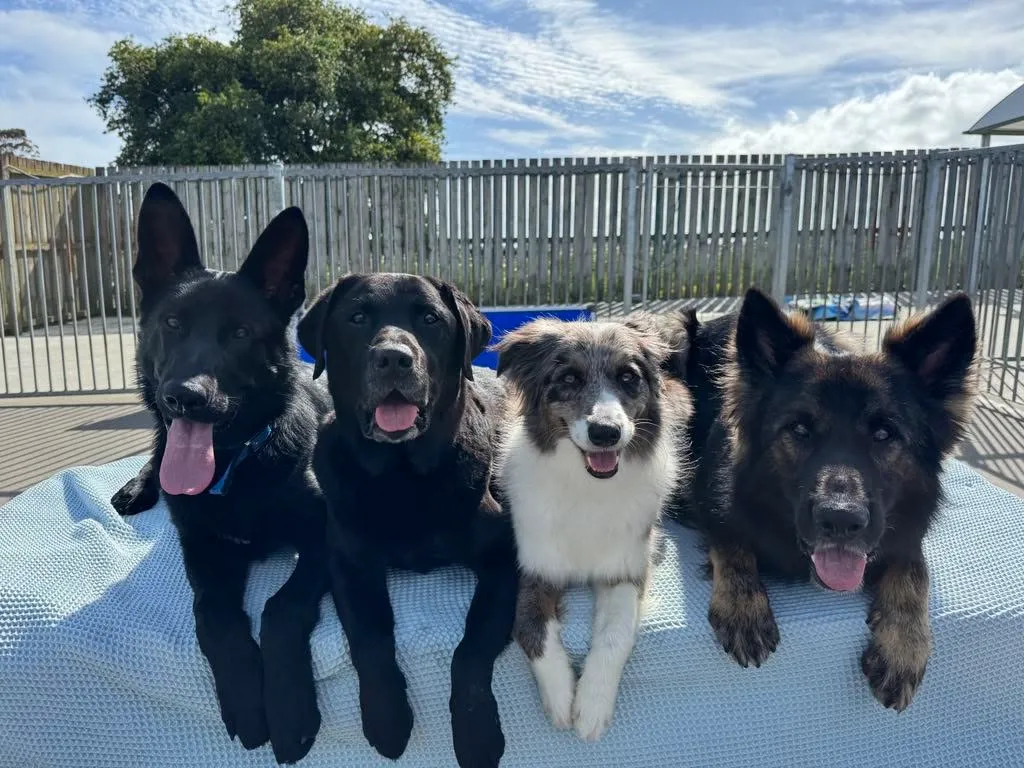
Handing your dog over to someone else’s care for the first time is a big step. Maybe you’ve booked a holiday, you’re heading away for work, or you’re moving house and need your dog somewhere safe while the boxes are unpacked. Whatever the reason, it’s completely normal to feel a bit anxious about it.
The good news is that a well-prepared stay is usually a much smoother one, for you and for your dog. A little planning in the weeks beforehand helps your dog settle quickly, helps the kennel staff care for them properly, and lets you enjoy your time away without constantly checking your phone.
This guide walks you through everything you need to know about first-time dog boarding in Auckland: how to choose a kennel, what to organise, what to pack, and how to make drop-off and pick-up as calm as possible. We’ve also included what it’s like at Brookby Lodge, our family-run kennels in the Brookby countryside, so you know what to expect from a countryside stay.
Why preparing ahead makes such a difference
Dogs thrive on routine. They know when breakfast arrives, when the walk happens and where their bed is. A boarding stay changes almost all of that at once: new smells, new sounds, new people and other dogs.
Some dogs take this in their stride. Others need a little more time to work out that everything is okay. Preparation doesn’t remove every wobble, but it gives your dog a head start and gives the team looking after them the information they need to fill in the gaps.
Good preparation also protects you from last-minute stress. Vaccination paperwork, medication and special feeding instructions are much easier to sort out a few weeks ahead than on the morning you’re rushing to the airport.
Start with choosing the right boarding kennel.
Before anything else, you need to find a place you feel comfortable with. If you’re still weighing up your options, our guide on how to choose the right dog kennels in New Zealand covers the main things to look for.
Visit before you book
Photos and websites only tell you so much. A visit lets you see how clean the kennels are, how the dogs are housed, and how the staff interact with the animals in their care. It also lets you ask questions face to face.
At Brookby Lodge, owners are welcome to visit before booking. Visiting and inspection times are 8:00 am to 11:00 am and 3:00 pm to 5:00 pm, and we encourage first-time boarders to arrange a tour so we can give you a personal walkthrough of the facilities.
What to look for when you visit
Trust your senses. A good kennel should look clean, smell fresh, and feel calm rather than chaotic. Some other things worth checking:
- Comfort and climate: Are the indoor areas comfortable year-round? At Brookby Lodge, all indoor areas are fully air-conditioned, which helps dogs stay comfortable through Auckland’s warm, humid summers.
- Space to move: Are there both indoor and outdoor areas, and do dogs get proper time out of their kennels?
- Exercise and attention: How much supervised play and exercise does each dog get? Our dogs enjoy up to six hours of supervised play and exercise each day.
- Someone on site: Is there a person on the premises at all times? Graeme and Ruth live on site at Brookby Lodge, which adds reassurance that someone is always close by.
- Experience: How long has the business been operating? We’ve been caring for dogs since 2007.
Questions worth asking
Don’t be shy about asking questions. A good kennel will be happy to answer them. Consider asking about feeding routines, what happens if your dog becomes unwell, how you can get updates, and what paperwork you need to provide. Asking these upfront means no surprises later.
Get your dog’s health and vaccinations in order
This is the step that most often catches first-timers out, so start early.
Every reputable boarding kennel will ask for proof that your dog’s vaccinations are up to date, because dogs in close contact with one another can share illnesses. At Brookby Lodge, we ask owners to bring proof of vaccination when they drop their dog off.
Here’s a simple approach:
- Check your dog’s vaccination record as soon as you’ve decided to book. If you’re not sure where it is, your vet clinic can usually send a copy.
- Look at the due dates. If a booster is coming up before or during your dog’s stay, get it done ahead of time rather than leaving it to the last minute.
- Speak to your vet about anything else your dog may need before boarding, including flea and worm treatment. Your vet knows your dog’s health history and can advise on what’s appropriate.
- Ask your kennel about timing. If you’re unsure how far ahead of a stay a vaccination should be given, check with both your vet and the kennel so you’re covered.
Leaving this to the last minute can mean a stressful dash to the vet, or in the worst case, a dog who can’t be admitted on the day. A quick check a few weeks out avoids all of that.
Share your dog’s routine, food, and personality.
The more the team knows about your dog, the better they can care for them. Think of it as writing a short “user guide” for your dog.
Food and feeding
Dogs can be sensitive to sudden changes in diet, and an unsettled stomach is the last thing you want during a stay in a new place. You’re welcome to bring your dog’s regular food, and we’ll follow your feeding instructions. If you’d prefer, we also provide Royal Canin and Butch food.
Let the team know about:
- How much your dog eats and how many times a day
- Any allergies, sensitivities, or foods to avoid
- Treats your dog can or can’t have
- Fussy habits, such as needing encouragement to eat in a new place
Medication and medical needs
If your dog takes medication, write down exactly what they need, the dose and when it’s given, and bring enough to last the whole stay plus a little extra. Also tell us about any ongoing health conditions, mobility issues or past injuries. Every pet has different needs, so we tailor care around each dog’s food, medication, and routine.
Personality and behaviour
This is where a bit of honesty goes a long way. Is your dog shy with new people? Boisterous with other dogs? Nervous about loud noises? Do they pull on the lead or get overexcited at the gate? None of this is a problem, but knowing about it helps the team manage your dog’s stay properly and keeps everyone safe and comfortable.
Also mention the small quirks, like a favourite spot for a snooze, a fear of the vacuum cleaner, or the word that means “dinner”. These details help staff build rapport quickly.
What to pack for dog boarding
Packing well is one of the easiest ways to help your dog feel at home. Here’s a practical dog boarding checklist:
Essentials
- Proof of vaccination
- Your dog’s regular food, if you’d like them to have it (pre-portioned if possible)
- Any medication, with clear written instructions
- Your contact details, plus an emergency contact who is reachable while you’re away
- Your vet’s name and phone number
- Written notes on routine, feeding, health and behaviour
Comfort items
- A familiar blanket or bedding that smells like home
- A favourite toy or chew, if it’s safe to leave with them
A few practical tips
- Label everything clearly. Blankets, bowls, toys and medication should all have your dog’s name on them so nothing goes astray.
- Don’t overpack. A couple of familiar items are better than a whole suitcase. Kennel spaces are designed to be comfortable, and too many belongings can get lost or damaged.
- Skip anything precious. Leave expensive beds, favourite-but-fragile toys and anything you’d be upset to lose at home.
A familiar blanket or toy can make a real difference. Your scent is comforting, and it gives your dog something that feels like theirs while they adjust to their surroundings.
Consider a practice run first.
If you have the time, a trial before a longer stay is one of the best things you can do for a first-time boarder.
Dog daycare is a gentle way to introduce your dog to a new place. They spend the day playing, resting, and meeting people, then come home with you that evening. Once they’ve been a few times, the drop-off area, the smells, and the staff become familiar, so a longer stay feels less like a leap into the unknown.
If you live locally and work during the week, our doggy daycare service is a good starting point. Our team offers personalised attention, engaging activities, and plenty of supervised playtime with other dogs. If your dog is still young, you may also like our guide on finding the right puppy daycare in Auckland.
If daycare isn’t practical, even a short one-night stay before a longer holiday can help you see how your dog copes and let you adjust anything for next time.
Prepare your dog in the weeks beforehand.
Boarding is easier when your dog is calm, well exercised, and confident with strangers. A few gentle habits in the weeks before can help.
Keep routines predictable
Try to keep meal times, walks, and bedtime consistent as the stay approaches. A steady routine gives your dog a sense of security, which they can carry into a new environment.
Build confidence with new people and places.
Short outings to new places, visits from friends and time spent in different environments all help your dog get used to change. Keep these experiences positive, with plenty of praise and the occasional treat.
Practise short separations
If your dog struggles to be alone, practise leaving them for short, calm periods and gradually build up. Keep your comings and goings low-key. The aim is for your dog to learn that you always come back.
Make sure they’re well exercised.
A good walk or play session before drop-off helps burn off nervous energy. A tired dog often settles into a new place more easily, but avoid over-exciting them just before you leave.
Drop-off day: keep it calm and simple
Dogs pick up on our emotions, so how you handle drop-off matters. The best approach is to be warm, confident, and brief.
- Arrive with plenty of time so you’re not rushed. Check-in and drop-off are available Monday to Friday from 7:00 am to 6:00 pm, and on weekends and public holidays from 7:30 am to 6:00 pm.
- Hand over your paperwork, food and medication, and go through your notes with the team.
- Keep your goodbye short and cheerful. Long, emotional farewells can make your dog think something is wrong. A quick pat, a calm word, and a confident exit are usually best.
- Don’t sneak away. Let your dog see you hand them over. Calm, matter-of-fact goodbyes build trust.
It’s natural to feel a little wobbly walking away. Remember that your dog is in the hands of experienced people who know how to help dogs settle. At Brookby Lodge, dogs are surrounded by ten acres of peaceful Brookby countryside, with plenty of space to enjoy.
While you’re away: staying in touch
Once you’re on your way, it helps to know how your dog is going. Most kennels will keep you updated, and it’s worth asking how before you leave.
At Brookby Lodge, we can send updates by email or text, and photos are available on request. You’re also welcome to call us to check in. Many owners also enjoy seeing photos of their dogs on our social media pages.
Try not to check in every hour. Dogs often take a little while to settle, and a quick update or two is usually enough to reassure you. If anything changes with your dog’s health, we’ll contact you promptly and arrange veterinary care through trusted local vets if it’s needed. That’s why it’s so important to leave contact details that will work for the whole time you’re away.
Pick-up day and settling back in
Reunions are joyful, but keep them calm. Excited dogs can be a handful, and you’ll want to greet your dog gently before you head home.
Once you’re back:
- Expect a tired dog. After days of play, new friends, and lots of activity, many dogs sleep soundly for a day or two.
- Offer water and a quiet space. Let them rest and drink whenever they like.
- Watch their appetite and energy. A slightly unsettled tummy or a bit of extra clinginess for a day or two isn’t unusual. If anything seems off for longer than that, contact your vet.
- Go back to normal routines as soon as you can. Regular meals and walks help your dog feel settled at home again.
Use the experience to learn for next time. If there was something your dog found tricky, tell the team so they can plan even better for the next stay.
Common first-time mistakes to avoid
Even well-organised owners can slip up on a first stay. A few to watch for:
- Booking too late. Auckland kennels fill quickly during school holidays and around Christmas and New Year, so book as early as you can.
- Forgetting paperwork. Missing vaccination records are the most common reason for delays at drop-off.
- Changing food suddenly. Stick to your dog’s usual diet unless you’ve agreed something else with the kennel.
- Leaving out important details. Even small things, like a fear of thunder or a habit of eating too fast, help the team look after your dog.
- Making the goodbye a big event. Keep it short and positive.
- Skipping the trial. A daycare day or a short first stay makes a longer holiday far less daunting.
Ready to book your dog’s first stay?
Preparing for first-time dog boarding takes a bit of planning, but it pays off in a calmer drop-off, a happier dog, and a lot more peace of mind for you. Choose a kennel you trust, get the paperwork sorted early, share plenty of detail about your dog, and pack a few familiar comforts.
Brookby Lodge has been caring for dogs of all ages, breeds and sizes in South Auckland since 2007. Whether you need overnight dog boarding or regular daycare, we’ll work with you to make your dog’s stay as comfortable and stress-free as possible.
- Learn more about our team and facilities
- Check our pricing plans
- Make a booking for your dog
- Or contact us to arrange a visit and talk through your dog’s needs
We’d love to meet you and your dog.